なつカフェ · Featured Story
Stories, updates, and moments from our growing cafe community.
If you’ve ever ordered matcha at two different cafes and wondered why they tasted like completely different drinks — you’re not imagining it. They probably were completely different drinks, just wearing the same name.
Matcha has a grades problem. The word gets used for everything from the real thing to a vaguely green powder that shares more DNA with food coloring than actual tea. And because most people don’t know the difference, a lot of cafes get away with serving the cheap version at specialty prices.
This is your guide to knowing the difference — and understanding why it actually matters.
What matcha actually is
Matcha is powdered green tea, but the process of making it is more involved than that description suggests.
It starts with shade-grown tea plants. About three to four weeks before harvest, the plants are covered to block direct sunlight. This slows growth, increases chlorophyll production, and causes the leaves to produce more L-theanine — an amino acid that contributes to that smooth, calm focus matcha is known for. It’s also why good matcha is that deep, vivid green and not a pale or yellowish color.
After harvest, the leaves are steamed, dried, and stone-ground into a fine powder. Slowly. Traditional stone grinding produces about 30 to 40 grams of matcha per hour, which is part of why quality matcha costs what it costs.
What you end up with — when it’s done properly — is something with a complex flavor profile: grassy, slightly sweet, with a pleasant bitterness and a long finish. Nothing like the sharp, astringent taste of low-grade matcha that makes people think they don’t like matcha when they actually just haven’t had the good kind.
The grades, explained simply
Matcha generally falls into two categories worth knowing about.
Ceremonial grade is the highest quality. It’s made from the youngest tea leaves, picked from the top of the plant where the most care went into growth. The flavor is smooth and nuanced. It’s meant to be prepared simply — just matcha and water — so the flavor can stand on its own. This is also the grade used in traditional Japanese tea ceremonies, which is where the name comes from.
Culinary grade is made from older, lower leaves. The flavor is more bitter and less complex, which isn’t necessarily a problem — it’s designed to be mixed into things like baked goods, smoothies, or heavily sweetened drinks where the subtlety of ceremonial grade would be lost anyway. It’s also significantly cheaper.
The issue arises when culinary grade gets used in matcha lattes and specialty drinks at cafes that charge ceremonial grade prices. You can taste the difference immediately: it’s sharper, more bitter, and has that slightly artificial green color rather than the deep, natural vibrancy of the real thing.
What Fuji ceremonial grade means
Not all ceremonial grade matcha is the same either — origin, harvest season, and processing all affect quality.
Fuji matcha comes from the Shizuoka region of Japan, near Mount Fuji, which has a climate and soil composition particularly well-suited to tea cultivation. It’s one of Japan’s most respected tea-producing regions and the source of a significant portion of Japan’s highest-quality green tea exports.
Ceremonial grade Fuji matcha tends to have a cleaner, more refined flavor than matcha from lower-altitude or less carefully managed farms. The color is a deeper, more saturated green. The texture when properly whisked is smoother. And the finish — that lingering sweetness after you swallow — is noticeably longer.
It’s the kind of matcha where you take a sip and understand, maybe for the first time, why people are so specific about this.
Why cafes cut corners on matcha
The honest answer is cost. Ceremonial grade matcha is significantly more expensive per gram than culinary grade. For a high-volume cafe trying to keep margins healthy, the temptation to substitute is real.
The other reason is that most customers don’t know the difference — yet. As matcha becomes more mainstream in the Philippines and drinkers become more educated, this is changing. People are starting to notice. They’re asking questions. They’re leaving reviews that specifically mention the matcha quality.
Cafes that invested in the real thing early are going to be in a better position as that shift happens.
How to tell if you’re getting the good stuff
You don’t need to be a tea expert to spot quality matcha. A few simple signals:
Color. Good ceremonial grade matcha is a deep, vibrant green — almost electric. Dull, pale, or yellowish matcha is a sign of lower grade or older stock.
Smell. Fresh ceremonial grade matcha smells grassy and slightly sweet. If it smells musty or has almost no smell at all, it’s either old or low quality.
Taste. The bitterness in good matcha is clean and brief. It shouldn’t linger unpleasantly or overwhelm the other flavors. If your matcha latte tastes mostly bitter with a sweet aftertaste that feels artificial, the base probably isn’t ceremonial grade.
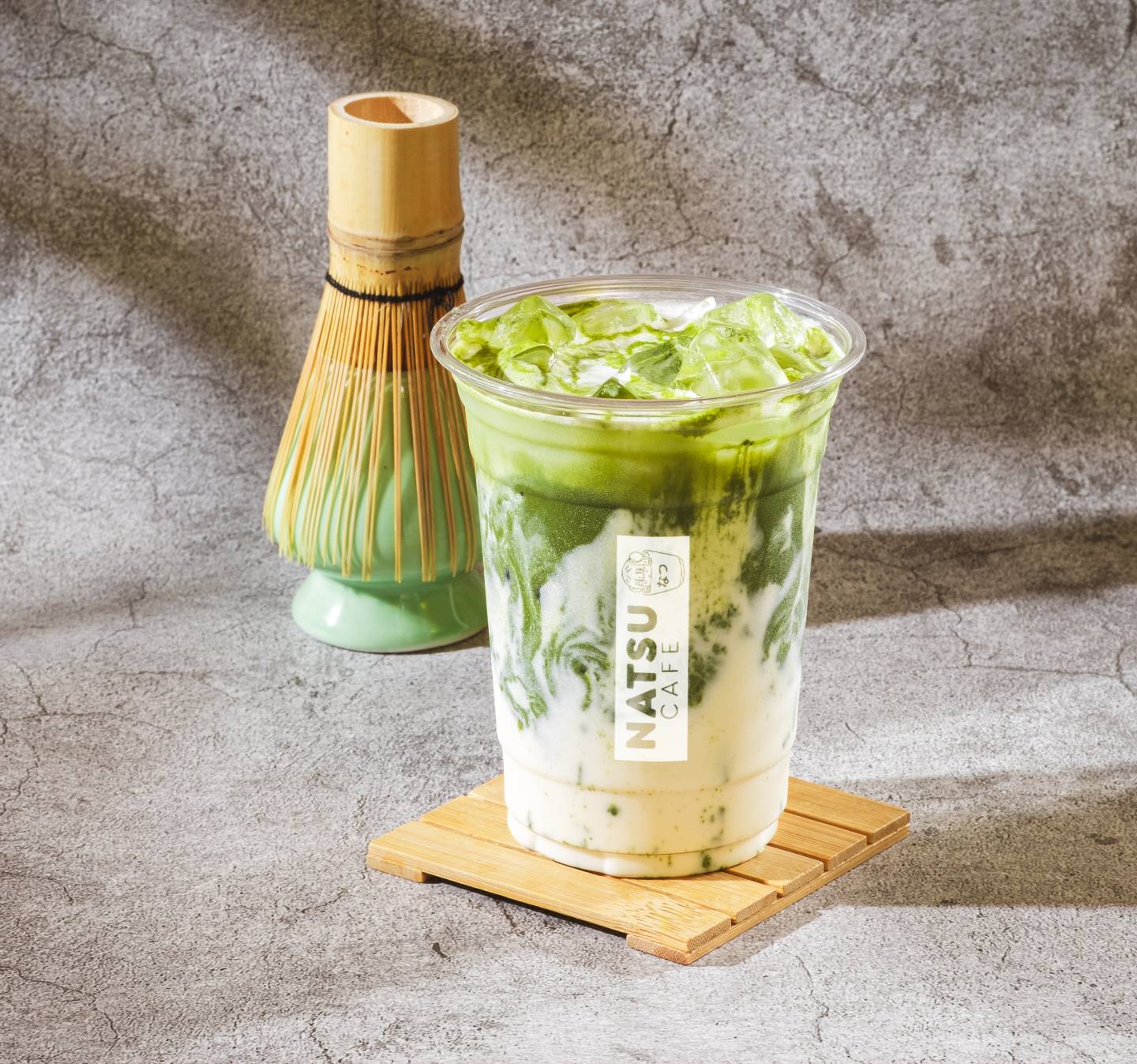
How it behaves in milk. Quality matcha incorporates smoothly into milk without clumping or separating. If you’re seeing green patches floating on top of your latte, that’s not a good sign.
Why it matters in a drink
A matcha latte made with ceremonial grade matcha tastes like something. It has layers — the grassiness, the subtle sweetness, the slight umami, the clean finish. The milk rounds it out rather than masking it.
A matcha latte made with culinary grade tastes like sweetened green water. The milk isn’t rounding anything out because there isn’t much underneath to work with.
This is why the same drink can taste completely different at two different cafes, even if the menu description reads identically.
What we use at Natsu
We use Fuji ceremonial grade matcha across all our branches — not as a marketing point, but because it’s the version that actually tastes the way matcha is supposed to taste.
If you’ve visited and noticed the matcha here tastes different from what you’ve had elsewhere, that’s why. And if you haven’t tried it yet, that’s the reason to.
Frequently Asked Questions
What is the difference between ceremonial and culinary grade matcha? Ceremonial grade is made from the youngest, highest-quality tea leaves and is meant to be consumed on its own — just matcha and water — because the flavor is complex enough to stand without mixing. Culinary grade uses older leaves, has a more bitter flavor, and is better suited for baking or heavily sweetened drinks.
Is ceremonial grade matcha worth the higher price? In a drink where matcha is the star — like a matcha latte or straight matcha — yes. The flavor difference is significant and immediately noticeable. In a baked good or smoothie, culinary grade works fine.
What does Fuji matcha taste like? Fuji ceremonial grade matcha has a smooth, grassy flavor with a natural sweetness and a clean, lingering finish. It’s noticeably less bitter than lower-grade matcha and has a deeper, more vivid green color.
How can I tell if a cafe is using good matcha? Look at the color — good ceremonial grade matcha produces a deep, vibrant green. Taste it — clean bitterness that fades quickly rather than a sharp, lingering astringency. And ask. A cafe that’s using quality matcha will usually tell you exactly what they’re using and why.
Where can I try ceremonial grade matcha in the Philippines? Natsu Cafe uses Fuji ceremonial grade matcha across all branches, currently located across Cavite, Bulacan, and Metro Manila, with more locations opening soon.